From Proof of Concept to Prototype: DBU Visits QuiMo
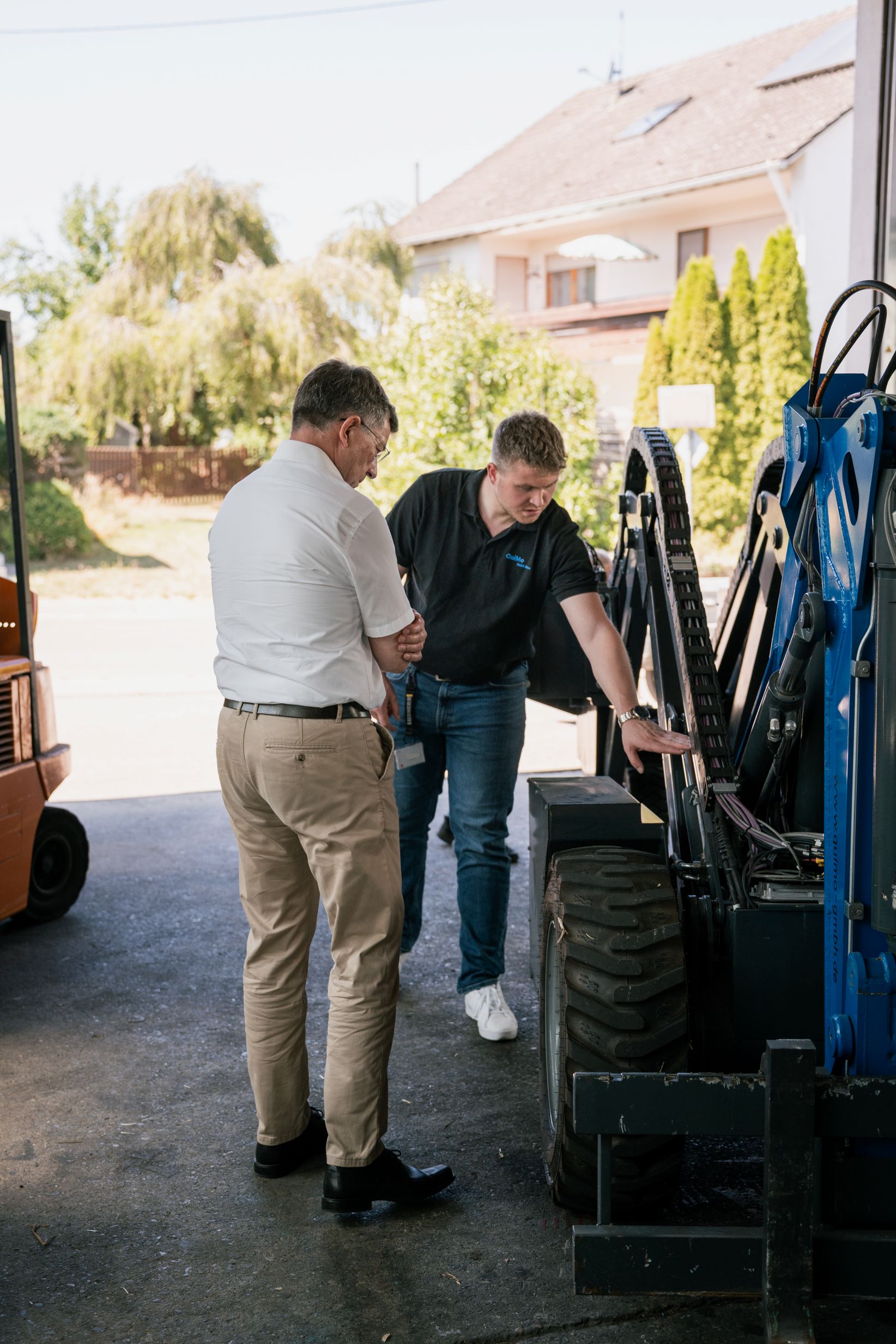
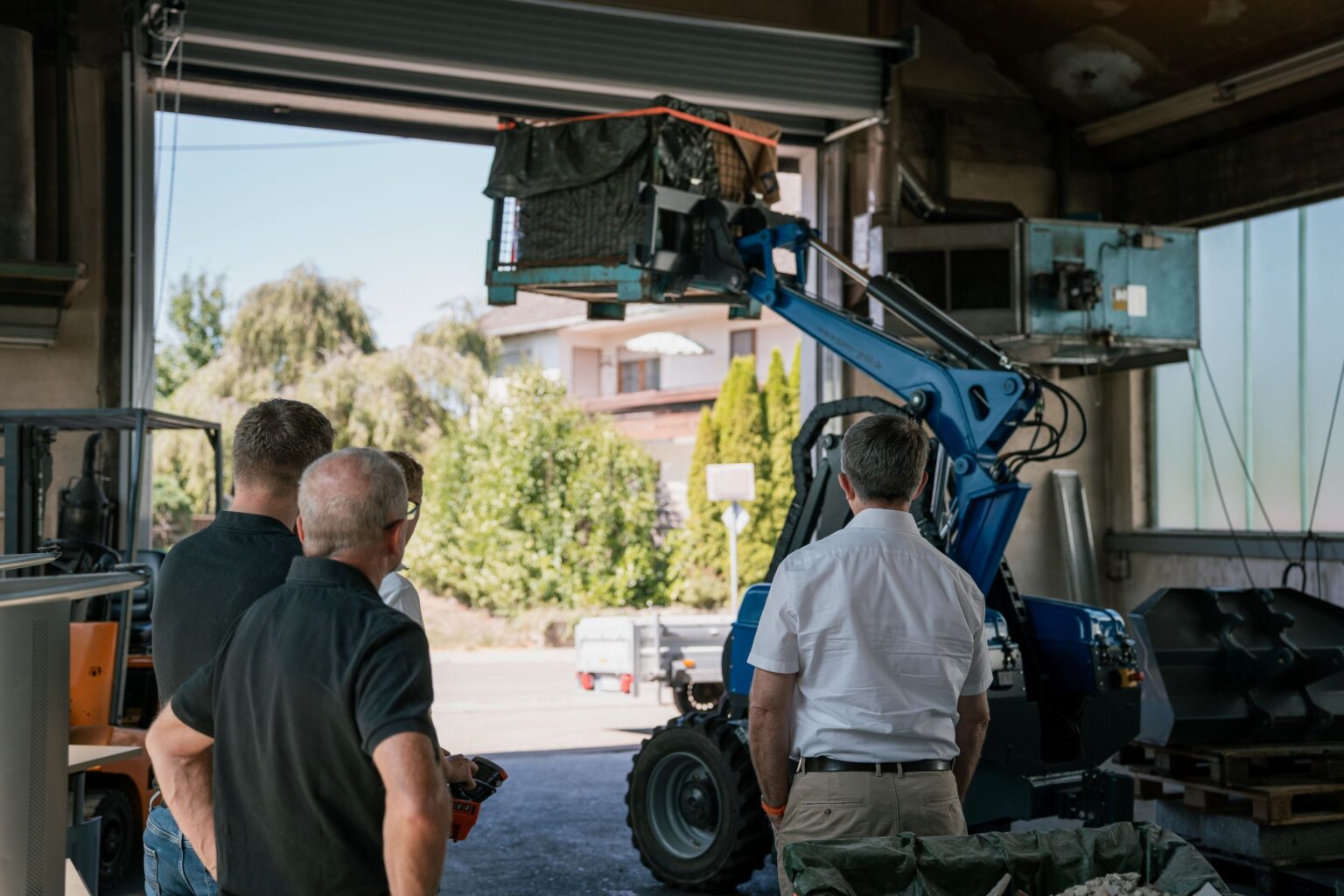
How far along is the QuiMo 1600 really? That’s exactly what Mr Schötz, Head of the Energy Department at the German Federal Environmental Foundation (DBU), wanted to see during his visit to our development facilities. We gave him a live demonstration of the current proof of concept and showed him the latest design status of the new prototype, which is scheduled to be certified in 2026, allowing it to be tested under real-world construction-site conditions.
The personal exchange gave us the opportunity not only to describe the results of our development work to date, but also to demonstrate them in practice. The discussion focused on three key topics: the current stage of development, the concrete progress made on the control system, and the next steps towards a prototype that can be tested under real-world field conditions.
Why Inner-City Construction Sites Need a New Generation of Machinery
Maneuvering space is limited, access routes are narrow, and environmental zones and noise regulations are placing increasing restrictions on diesel-powered equipment. When working on existing buildings, construction often also takes place in enclosed spaces. At the same time, experienced machine operators are increasingly difficult to find.
This is what our development goals are based on: zero-emission operation at the point of use, a compact design, multiple functions combined in a single machine, and intuitive operation that can be mastered even without years of experience.
Demonstrated Live: What the Proof of Concept Can Do Today
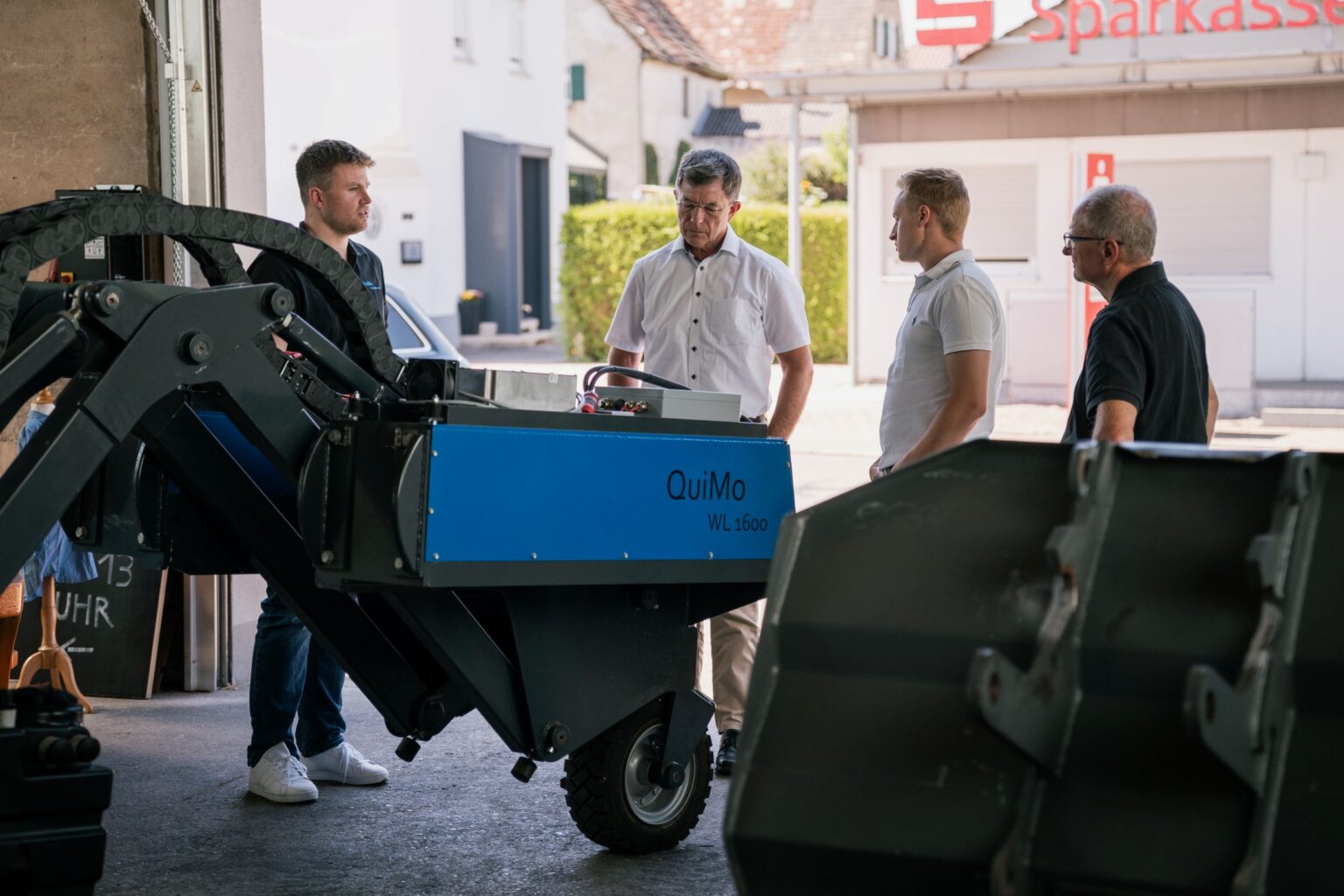
The visit was designed as a practical demonstration rather than a presentation. Using the existing proof of concept, loads can be kept precisely level while being moved both vertically and horizontally. Thanks to the revised control technology, the movements have become smoother and more controlled. When the load is positioned above the axle, the machine adopts a more compact geometry, making it easier to maneuver in confined spaces.

The Next Generation of Machinery
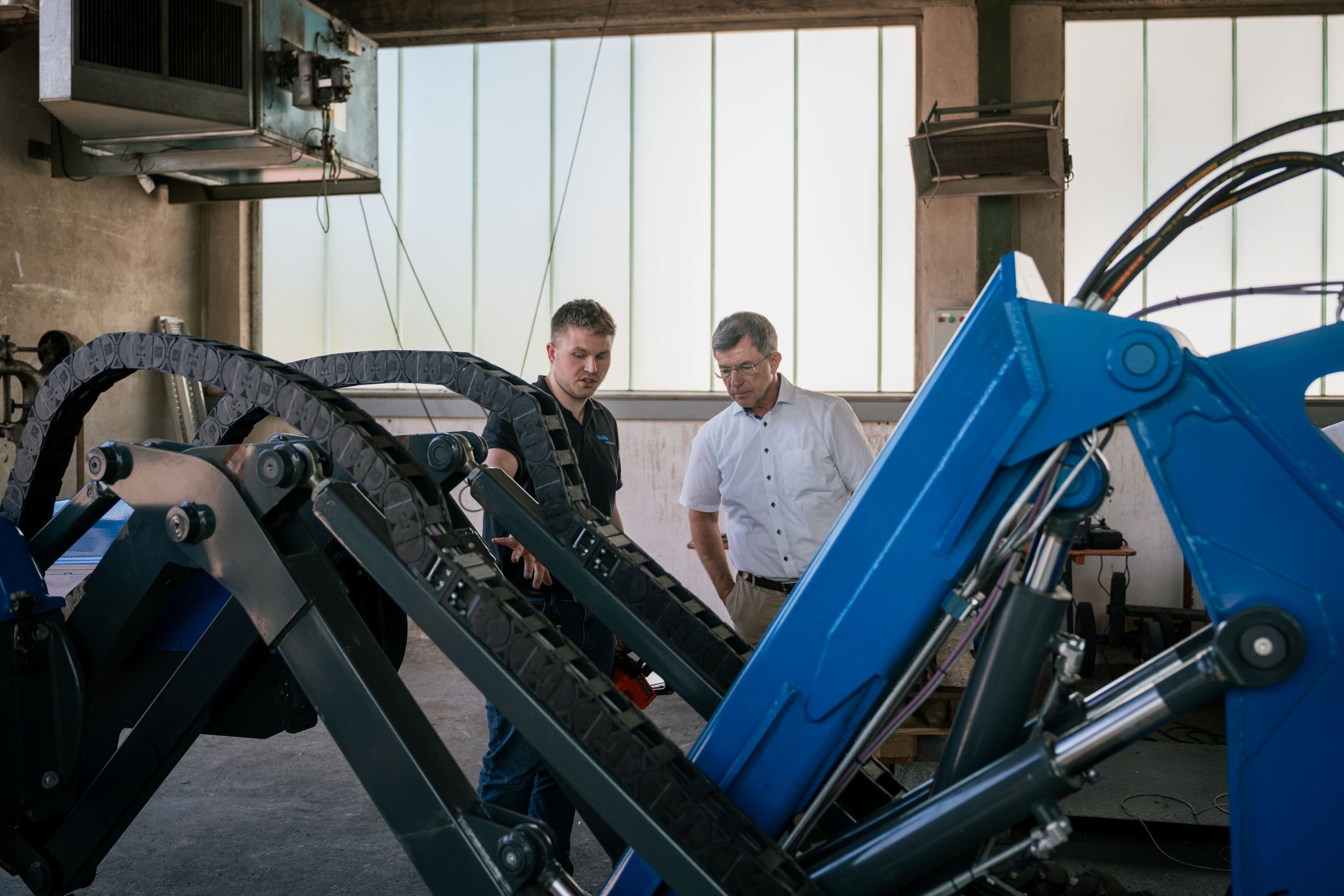
In parallel, we presented the current design status of the next generation of machinery. This is not a minor redesign, but a fundamentally new approach on three levels. The structure is engineered to withstand the demands of continuous construction-site use, the software architecture has been restructured, and the control technology has been harmonized to coordinate the hydraulic functions more effectively. One example is load handling. Several joints and cylinders act simultaneously on the position and orientation of the load arm. Conventional control systems require each axis to be operated individually. With the QuiMo 1600, the software takes over this coordination, while the operator only specifies the desired direction of movement. Where skilled workers are in short supply, this reduction in training time can determine whether a machine is practical for day-to-day use. The driving force behind this development is feedback from real-world construction practice. Input from construction companies has already led to noticeable changes in individual components.
Environmental Benefits in Real-World Operation
The environmental benefits are not realized on the data sheet, but in actual operation. The machine operates with zero local emissions and at significantly lower noise levels, extending potential working hours and enabling use indoors and in low-emission zones. Its multifunctionality can replace several individual machines, reducing transport journeys, equipment requirements, and material use over the machine’s life cycle. Systematically measuring these effects during real-world operation is a key part of the next phase of development.
Next Milestone: Certification in 2026
The prototype of the new generation of machinery is scheduled to be certified in 2026. This certification will mark the point at which the machine moves beyond the protected development environment and into regular construction-site operation. Testing under real-world conditions will provide reliable data on availability, maintenance requirements, and energy consumption, thereby demonstrating both its environmental and economic benefits. For construction companies, this will transform a development project into a machine that can be deployed in day-to-day operations. Beyond this, QuiMo, as an independent company acting under its own entrepreneurial responsibility, aims to make the technology accessible to a broader user base. We would like to thank Mr Schötz and the German Federal Environmental Foundation (DBU) for their visit and the constructive exchange.
About the German Federal Environmental Foundation (DBU)
The German Federal Environmental Foundation (DBU) is one of the largest environmental foundations in Europe. It supports innovative, exemplary and solution-oriented projects that make concrete contributions to protecting the environment and the climate.
A particular focus is placed on practice-oriented projects and collaboration with small and medium-sized enterprises. Its funding areas include environmental technology, environmental research, environmental communication, and the protection of nature and cultural assets. Through its funding activities, the DBU supports companies, research institutions and other organizations in putting innovative ideas into practice.